When I talk to people about societal collapse, one thing often comes up that rubs me the wrong way: that isolating yourself from collapse is a realistic strategy. The most extreme version of this is the idea that it is a reasonable approach to these dangerous times to hunker down and isolate yourself in your own little refuge. This is a road regularly taken by billionaires, but it seems to have at least some appeal to normal people as well. Because for non-billionaries this gets expressed as an idealized little commune, where everything is grown and produced locally and the collapse of civilization is made survivable by becoming one with nature. I think both of these “survival strategies” do not work and they fail for quite similar reasons.
No place is safe against all kinds of catastrophe
The first problem this runs into is that you do not know what kind of catastrophe will get you. There are a large number of things that could potentially end civilization, nuclear winter, a pandemic, geomagnetic storms, you name it. While some of those might have some warning time you could use to prepare, it seems unlikely that you will have enough warning to only start your refuge once you know what is happening. This means you have to settle for a place now. But which one?
There is one paper that looks at exactly this question by Jehn et al. (2026). This is a literature review about all the documents that discuss what makes places more well suited to weather all kinds of global catastrophes. From these 150+ papers we isolated all the factors that make a place more (or less) resilient to global catastrophic risk. The paper goes into quite some detail, but for the sake of this argument, we can just look at the visual abstract (Figure 1). This highlights that there are some factors that are generally good for all kinds of catastrophes. These can be roughly summarized as having a democratic and well functioning state. However, there are also many factors that stand in direct contrast with each other. For infrastructure loss scenarios it is good to have low-tech, decentralized infrastructure, as this means you can still re-use some after the catastrophe and can more easily prevent it from collapsing. However, for abrupt sunlight reduction scenarios and pandemics you will have a better chance of survival if you have a large and modern industrial base as you can use all this industrial power to produce the goods and technologies you need to survive.
As you can see in the figure, even with those trade-offs some countries will have better chances, as the figure also highlights, but even those still need cooperation and trade, because no country on its own could face global catastrophe and hope for a good chance to survive.
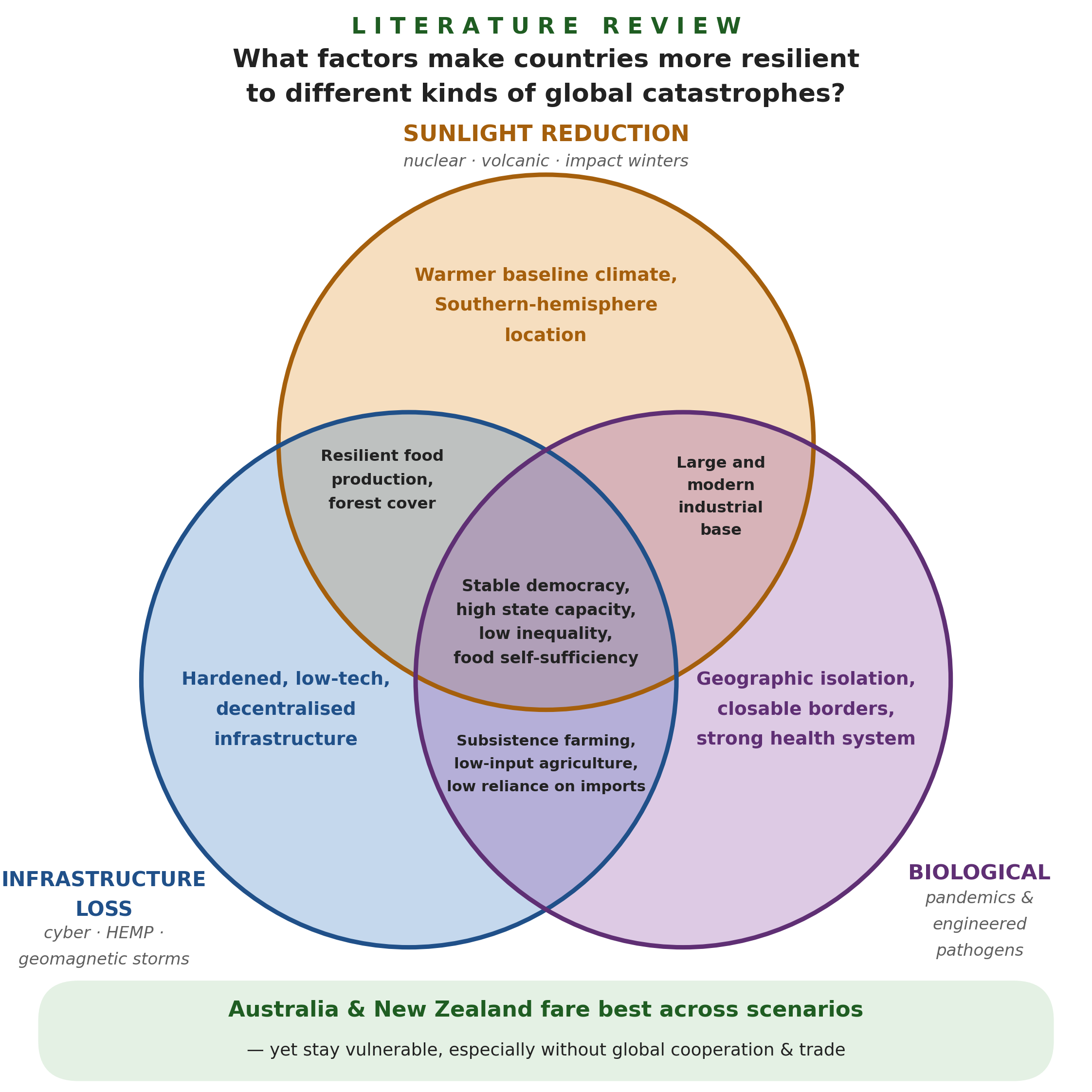
Figure 1: Overview of what factors make places more resilient to a variety of global catastrophic risk.
Why cooperation is so important
One paper that shows nicely how important trade and cooperation is after catastrophe is Rivers et al. (2024). The paper itself uses a complex model of the post-catastrophe food system to understand how much of the population in each country can be fed with resilient foods and trading the surplus between countries (1). To do so, it simulates a severe nuclear winter and how the remaining food production options could be scaled up in individual countries. This shows that for a majority of countries this does not really work (Figure 2). They simply do not have the capacity to produce enough to feed everyone at the current moment (2). However, if you would allow trade, there could be enough food for everyone.
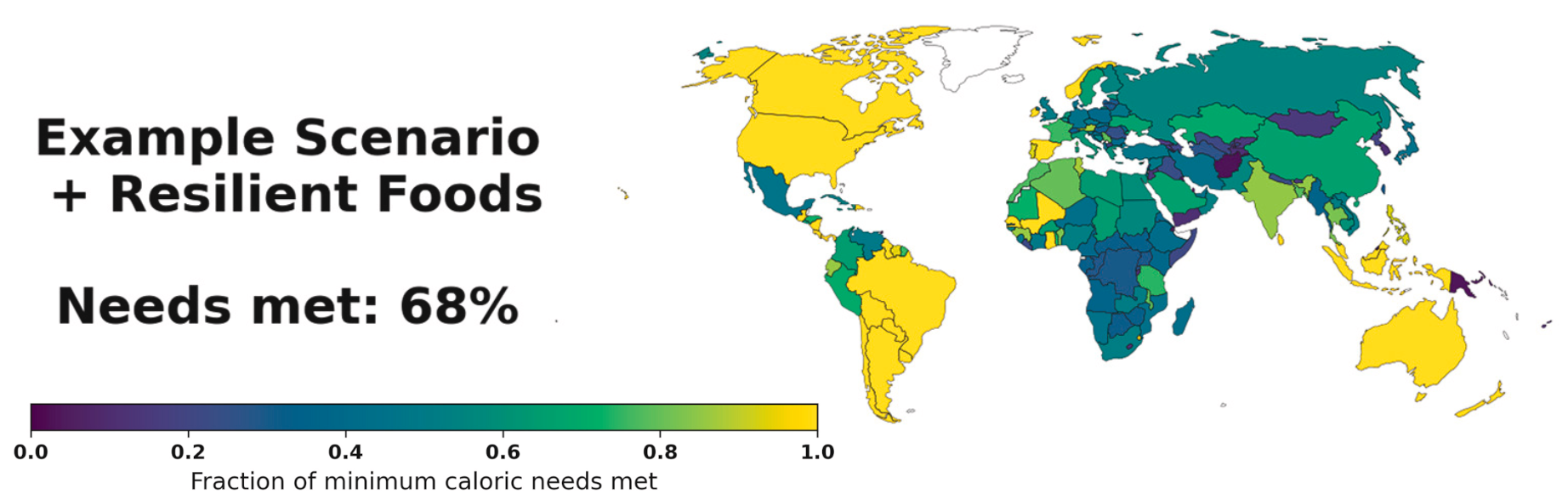
Figure 2: Estimate of how much of each country could be fed with resilient foods, but no trade.
Admittedly, this is a pretty extreme scenario, but this just looks at food. To survive you need much more. The same mechanism happens for all kinds of essential goods, think fuel, fertilizers, medicine, computers and so on. You are dependent on those things and they will not be available pretty much anywhere if trade would cease.
To make a concrete example of this, think of New Zealand. It comes out on top for many of the resilience factors. But is it enough? To understand this better we can look at Wilson et al. (2025). They studied New Zealand’s trade reliance for medicine in the form of the ten most used pharmaceuticals in the country. Specifically, they analyzed all the inputs that are needed for those. For ten out of these ten pharmaceuticals New Zealand has no national production for the ingredients and thus could not sustain itself. Mostly, this is due to its lack of petrochemical refining in the country, but also due to a lack of mines or other chemical production. This means that New Zealand would lose all of this medicine and likely also many other medicine products. The case is not different for many other goods. Pretty much everything you use is connected to the global supply chain and cannot be easily replaced. Especially not on short notice. This means you would not only have no medicine, but also loose things like fertilizers, fuel, and computers. Losing each of those categories individually would be hard, losing all of them at once would be devastating. This means trading is essential for pretty much every country.
You might think: “But can’t I just simply stockpile all of this?”. Certainly you can create a buffer, but this is extremely expensive as you have to stock enough for the rest of your life. Also, this is just talking about you. If you have a family or some friends the amount of stocks needed quickly gets unfeasible, if you have to assume that there will never be a shipment to fill things up again.
Local food production is only an option for a fraction of global population
But for the arguments sake, let us assume that you somehow managed to be completely independent from all imports and so your only job would be to grow your own food locally. Would this work? For most of humanity, the answer is a pretty clear no. Most humans just do not live in a place that would allow them to produce the food they need. This simply starts with the majority of people living in cities. If you are one of those humans, look around. Where exactly would you grow your own food? There’s no room. One paper that explores this is by Boyd & Wilson (2025). They wanted to understand how much of New Zealand’s population could be fed with urban agriculture. To do this they used satellite images to detect how much free space to farm exists both in a typical New Zealand city and then they calculated how much calories you could produce on those areas if you used the most efficient crops. They find that these areas could only feed around 20 % of the population. Everything else would have to come from outside the city. This might work in the relatively small towns of New Zealand, but for many of the bigger cities around the world, this number would be much, much lower and thus feeding the population there even more unfeasible.
But it does not end there. Many places where people currently live are not able to produce enough food due to things like adverse climate or unsuitable soil. We do not even have to guess the numbers. In a pretty interesting paper, Kinnunen et al. (2020) looked at how far present day humans live away from the region that produces their food. To do this they took the system on how we produce food today and then calculated how we would have to distribute food globally to minimize the overall amount of distance food would have to travel. This allowed them to produce a map that shows how far away people would be from their food production (Figure 3). As you can see for a large part of the global population this would be quite some distance. For many people those food producing regions would be thousands of kilometers away. Seems unlikely that everybody would just walk to their assigned food production region after societal collapse happens.
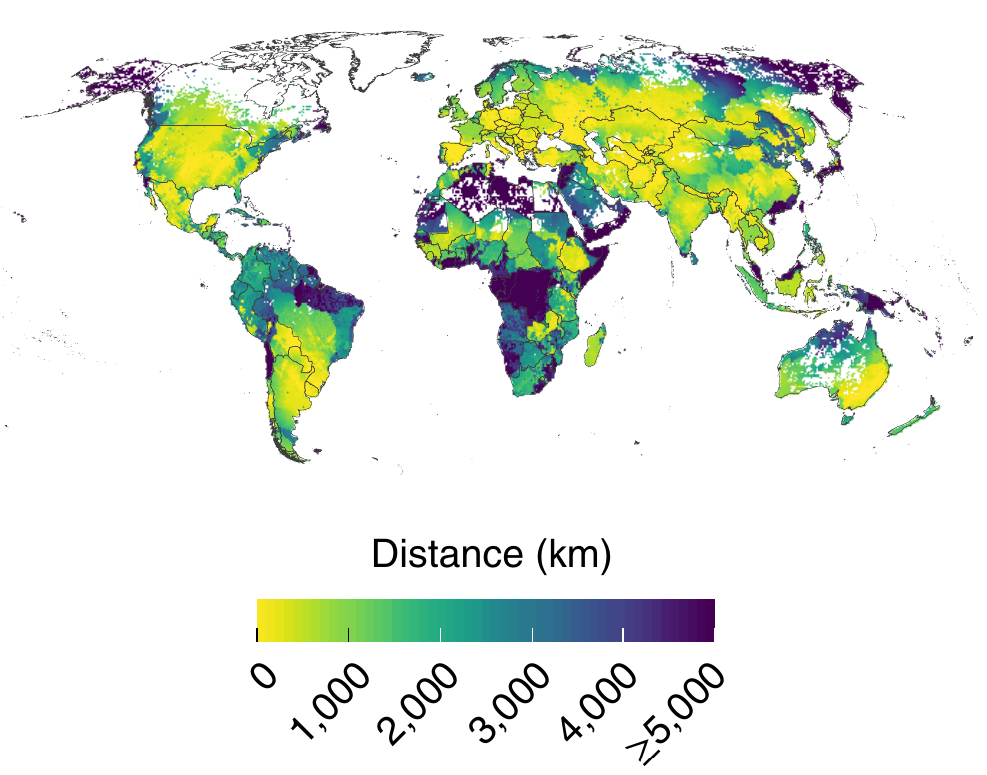
Figure 3: Simulated distance from food production to consumption.
And remember, this assumes present day production, not post collapse. These distances would be way longer if this would have to be done with farming methods before industrialization. I cannot tell you exactly how long, but we can look at how much our modern food production relies on inputs like fertilizer or fuel which we take for granted. For this we can use Moersdorf et al. (2024). This paper estimated how much of global food production is based on the effects of agricultural inputs. Once this is known, the second step is to simulate how global yields would decline if we would lose access to those inputs (Figure 4). As you can see this would reduce the yields quite a lot. And this still assumes that people would know how to farm. But do you? Do you think you could run a farm on the level of a medieval peasant whose family has been working the same piece of land for 10 generations?
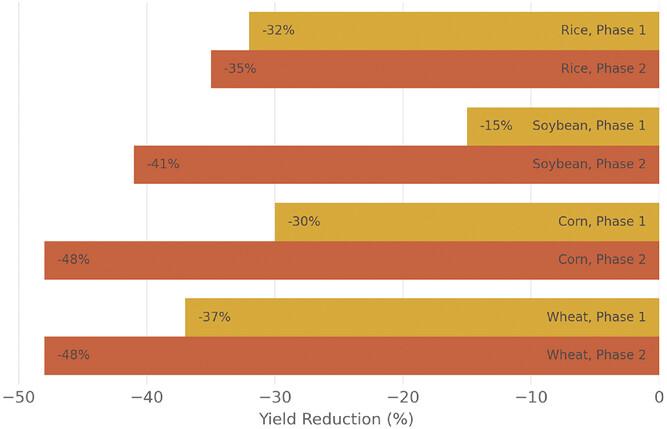
Figure 4: Projected yield reduction for phase 1 (some industrial inputs) and 2 (no industrial inputs) by crop.
Conclusion
The argument I want to make here is not that societal collapse could not be survivable. I think it is, if societies have invested enough in resilience. I just think that, given what we know, trying to ride it out on your own or in a local commune is not a realistic option. Betting on it shows both a deep lack of solidarity and is also a bad strategy. So the next time someone tells you that they are planning to isolate themselves from everybody else to survive societal collapse, you can congratulate them on spending their remaining time to work hard for the privilege to starve slightly later. The better path is the opposite. We need cooperation, we need trade. Maybe not globally, but certainly at regional or even continental scale. The more, the better. Your best survival strategy is therefore not to think of yourself in your little refuge, but to help build regional partnerships, better democracies and strong networks. We all stand and fall together.
Endnotes
(1) If you do not recall what resilient foods are, see here.
(2) Current analyses provide a snapshot of production and self-sufficiency, revealing that many countries fall short of their domestic food needs. This does not necessarily indicate an inability to produce sufficiently; cheaper imports and structural constraints (for example, cropping cycles, infrastructure limitations) may suppress production. However, current production volumes serve as a reliable indicator of a country’s capacity to quickly respond to trade disruptions. See here for more about this.
References
- Boyd, M., & Wilson, N. (2025). Resilience to abrupt global catastrophic risks disrupting trade: Combining urban and near-urban agriculture in a quantified case study of a globally median-sized city. PLOS One, 20(5), e0321203. https://doi.org/10.1371/journal.pone.0321203
- Jehn, F. U., Rössler, M., Kemp, L., Cassidy, M., Kallenborn, Z., García Martínez, J. B., Mani, L., & Boyd, M. (2026). No Place to Hide? Regional Resilience and Vulnerability to Global Catastrophic Risk. Global Challenges, 10(8), e70146. https://doi.org/10.1002/gch2.70146
- Kinnunen, P., Guillaume, J. H. A., Taka, M., D’Odorico, P., Siebert, S., Puma, M. J., Jalava, M., & Kummu, M. (2020). Local food crop production can fulfil demand for less than one-third of the population. Nature Food, 1(4), 229–237. https://doi.org/10.1038/s43016-020-0060-7
- Moersdorf, J., Rivers, M., Denkenberger, D., Breuer, L., & Jehn, F. U. (2024). The Fragile State of Industrial Agriculture: Estimating Crop Yield Reductions in a Global Catastrophic Infrastructure Loss Scenario. Global Challenges, 8(1), 2300206. https://doi.org/10.1002/gch2.202300206
- Rivers, M., Hinge, M., Rassool, K., Blouin, S., Jehn, F. U., Martínez, J. B. G., Grilo, V. A., Jaeck, V., Tieman, R. J., Mulhall, J., Butt, T. E., & Denkenberger, D. C. (2024). Food system adaptation and maintaining trade could mitigate global famine in abrupt sunlight reduction scenarios. Global Food Security, 43, 100807. https://doi.org/10.1016/j.gfs.2024.100807
- Wilson, N., Wood, P., & Boyd, M. (2025). Capacity to manufacture key pharmaceuticals in New Zealand after a global catastrophe. New Zealand Medical Journal, 138(1625), 44–58. https://doi.org/10.26635/6965.7053